Leaks at fittings and valves
We trace drips to the cold inlet, hot outlet, shutoff valve, T&P relief valve, drain valve, and nearby piping so the actual failure point gets addressed.
Serving Overland Park, Kansas & surrounding areas
Mon–Fri 8am–6pm · Sat 9am–2pm
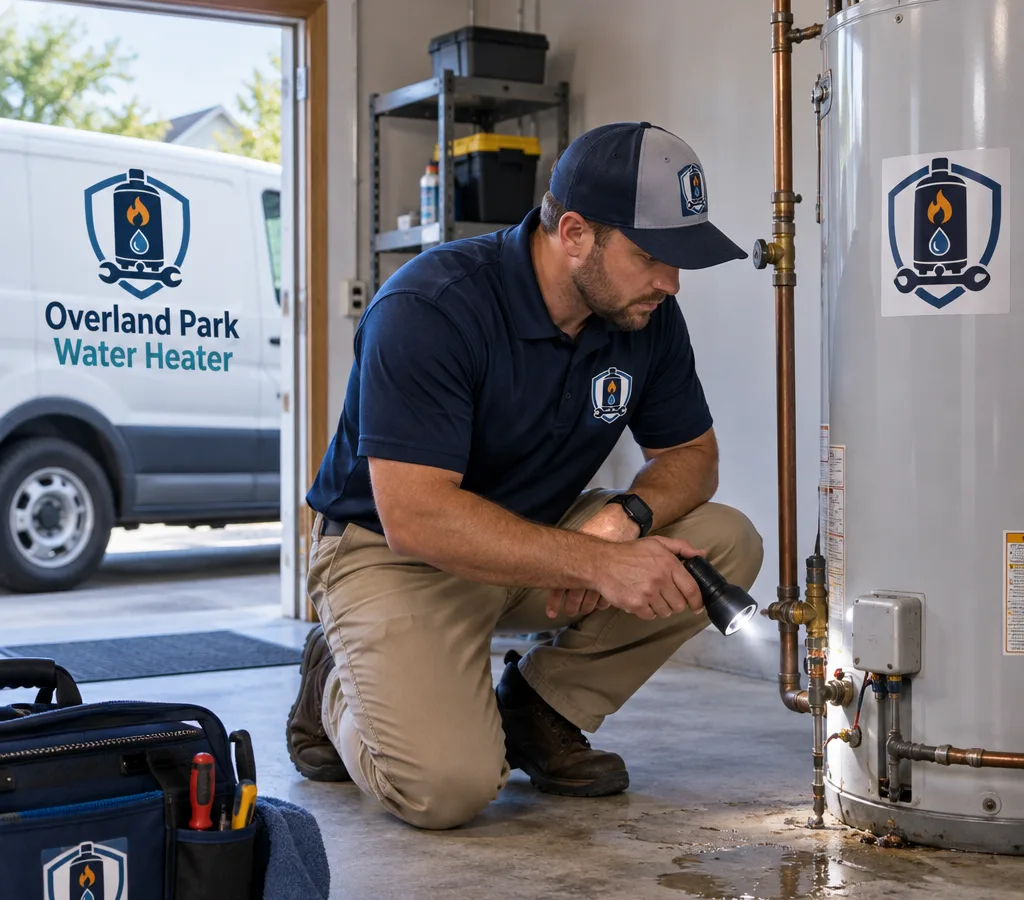
Emergency water heater service · Overland Park
Stop the leak before it becomes water damage. We troubleshoot fast, isolate the cause, and restore hot water with clear options for repair or replacement.
Urgent local response
A leaking water heater is one of those problems that can go from “small drip” to soaked drywall and warped flooring in a hurry. In Overland Park, many water heaters sit in basements, garages, or interior utility closets, so a leak can spread without you noticing until the damage is already done.
Overland Park Water Heater handles urgent leaks, sudden loss of hot water, and after-hours breakdowns. The first step is always to make it safe: shut off the right valve, relieve pressure if needed, and stop the active leak. Then we find the source and give you a straight answer on whether you're looking at a repair you can trust or a tank that's reached the end.
If you are dealing with multiple symptoms, like a drip plus no hot water, or water on the floor plus a tripped breaker for an electric unit, tell us what you're seeing. Those details help us arrive prepared and move quickly once we are on site. For a broader overview of local options and service coverage, you can also refer to water heater repair in Overland Park.
Leak sources and symptoms
We trace drips to the cold inlet, hot outlet, shutoff valve, T&P relief valve, drain valve, and nearby piping so the actual failure point gets addressed.
Water under the unit often points to internal corrosion. If the tank itself is leaking, repair is usually not reliable, and we will walk you through replacement options.
A failing thermostat, heating element, gas control valve, or pilot/ignition issue can show up alongside leaks. We diagnose both issues so you are not stuck with a partial fix.
If a tank ruptures, the priority is stopping flow, protecting nearby materials, and getting hot water restored fast with an install plan that fits your home's venting and hookups.
High pressure or a failed expansion tank can stress a system and trigger relief valve discharge. We check the setup so you do not get repeat leaks.
Small leaks can travel along piping and show up far from the source. We follow moisture patterns and inspect common failure points to confirm the true origin.
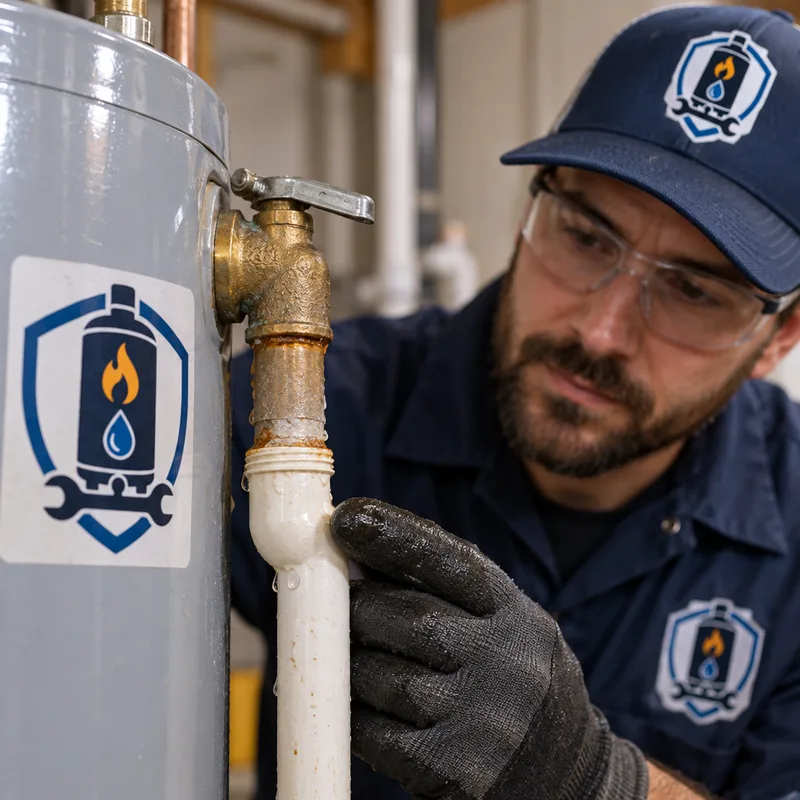
Stopping the water is only half the job. A reliable repair depends on finding the exact failure point and the condition that caused it.
We start with a visual inspection around the tank, pan, and nearby piping. Many “tank leaks” are actually connection leaks, a loose drain valve, or discharge from the temperature and pressure (T&P) relief valve. The T&P valve is a critical safety device; if it is opening because the unit is overheating or pressure is too high, replacing the valve alone can miss the real problem.
From there we check the basics that affect safety and repeat failures: inlet/outlet connections, shutoff condition, signs of corrosion at the nipples, evidence of backdrafting or vent issues on gas units, and electrical condition on electric models. If the tank is actively seeping from the jacket or base seam, we will tell you plainly that it is a replacement situation and help you choose the fastest path to restored hot water.
For emergency water heater repair in Overland Park, speed matters, but accuracy matters more. A rushed guess can turn into a second leak a week later. Our goal is a fix that holds.
From active leak to verified repair
We confirm whether the leak is active, shut off the correct water supply, and stabilize the area to limit water damage. If needed, we guide you on safe shutoffs before arrival.
We pinpoint whether the water is coming from a valve, a fitting, relief discharge, condensate on certain high-efficiency setups, or the tank body itself.
You get clear options: a repair you can rely on, or a replacement plan if the tank is compromised. We explain the tradeoffs in plain language.
After the work, we confirm proper fill, ignition or element operation, temperature settings, and that the area stays dry through a full cycle.
Know what the symptoms mean
Not every leak means the tank is done. The symptom pattern helps narrow it down fast.
Water pooling under the unit: This can be a tank seam failure, but it can also be a slow drip from the drain valve or a connection that runs down the jacket. We dry and re-check to confirm.
Dripping from the discharge pipe: If you see water from the T&P discharge line, the system may be relieving pressure or temperature. That can point to a bad valve, pressure issues, or overheating. It needs diagnosis, not a guess.
Leak plus no hot water: With electric units, a leak can trip a breaker or damage components. With gas units, moisture and corrosion can affect the burner area and controls. Either way, we treat it as both a water and safety issue.
Sudden large leak or burst water heater: If the tank ruptures, the right move is to stop the flow and plan for replacement. We can also advise on practical steps to protect floors and nearby belongings while service is on the way.
If you are near 9095 Bond St, Suite 5, or anywhere in the Overland Park area, we can dispatch for same-day water heater repair when scheduling allows. If you are not sure whether it is truly an emergency, a good rule is this: any active leak, any water near electrical components, or any sign of tank rupture should be treated as urgent.
Leaking water heater repair in Overland Park typically ranges from about $200 to $750 for common fixes like valves, fittings, or minor piping repairs, while a full replacement after a tank failure often runs $1,600 to $3,800+ depending on tank size, fuel type, venting, and code upgrades.
Your final cost depends on where the leak is (tank vs. connection), accessibility, corrosion level, parts availability, and whether the issue is tied to pressure/expansion or controls. Exact pricing is confirmed after an on-site inspection and diagnosis.
Customer experience
“We found water on the basement floor and thought the tank had split. The tech traced it to a leaking valve and a corroded connection, fixed it, and stayed until the heater cycled and the area stayed dry.”
Megan R.
“Our water heater started leaking and we also had no hot water. They explained what failed, gave options, and got us back up the same day without trying to sell us something we didn't need.”
Daniel K.
Straight answers
Shut off the cold-water supply to the water heater and keep people away from any standing water near electrical outlets or the unit's wiring. If the leak is heavy, turn off power to an electric heater at the breaker, or set a gas unit to the lowest safe setting per the manufacturer instructions, then get emergency service scheduled so the source can be confirmed and corrected.
A tank leak usually shows as water seeping from the base seam or wetness behind the outer jacket, while fitting leaks are often localized at threaded connections, valves, or the relief discharge line. We dry the area, watch for fresh moisture, and inspect each point in order so you do not replace a tank when a connection repair would solve it.
Yes. If the leak affects electrical components, trips a breaker, or damages the heating elements on an electric unit, you can lose hot water quickly. On gas units, water intrusion and corrosion can interfere with ignition or burner operation, and relief valve discharge can also reduce effective heating performance.
Yes, a burst water heater means the tank has failed and the unit must be replaced. The repair focus becomes stopping the flow, confirming there is no damage to the shutoff and nearby piping, and installing a correctly sized replacement that matches the home's venting and fuel type.
Same-day service is often possible for active leaks and no-hot-water situations, depending on the day's schedule and parts availability. The fastest outcomes usually happen when you can describe where the water is appearing (top connections, relief pipe, or base) and whether the unit is gas or electric.
If the leak is coming from a serviceable part such as a valve, fitting, or short run of piping, a repair is typically the right first option. If the tank body is leaking, replacement is the only dependable fix, and we will explain why and what replacement choices fit the existing hookups.
Urgent leak help
Tell us what you're seeing and where the water is collecting. We'll prioritize urgent leaks, confirm the cause on site, and give you a clear repair or replacement plan before work begins.