No hot water
Often tied to a failed heating element or thermostat on electric units, or a pilot/ignition or gas valve issue on gas units. We confirm the root cause before any parts are replaced.
Serving Overland Park, Kansas & surrounding areas
Mon–Fri 8am–6pm · Sat 9am–2pm
Water heater repair · Overland Park & Kansas City
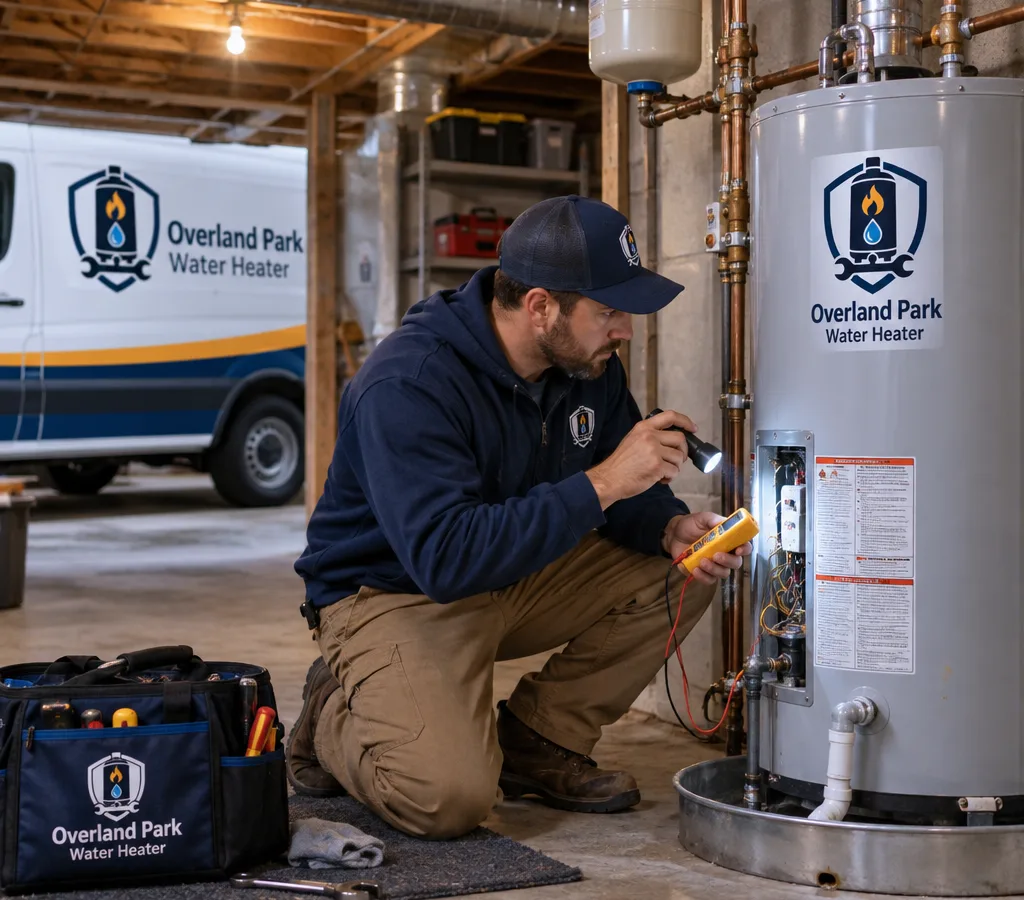
If your hot water is out, lukewarm, or leaking, we troubleshoot fast, explain the fix in plain terms, and restore safe, reliable hot water for homes in Overland Park and the Kansas City area.
Repair-first troubleshooting
When you search for hot water heater repair Kansas City, you usually need two things: hot water back quickly and a straight answer about whether a repair makes sense. Overland Park Water Heater handles common water-heater failures on both tank and tankless systems, with a repair-first approach when the unit is safe to keep.
We start by confirming what is actually failing—not guessing. That means checking power or gas supply, control settings, venting and combustion safety on gas models, temperature and pressure (T&P) relief function, and the condition of internal components that wear out. If a repair is the right move, we complete it with the correct part and verify operation under load so you are not stuck with another cold shower the next morning.
If the situation points toward replacement instead, you will get a clear explanation of why, plus options that fit your home and budget. You can also get a broader overview of water heater repair if you are comparing service types or trying to confirm symptoms before scheduling.
Symptoms and likely causes
Often tied to a failed heating element or thermostat on electric units, or a pilot/ignition or gas valve issue on gas units. We confirm the root cause before any parts are replaced.
Can point to a lower element failure, sediment buildup in the tank, a mis-set thermostat, or a dip tube issue. We test recovery rate and temperature stability.
A leak might be from fittings, the drain valve, the T&P valve discharge, or the tank itself. We trace the source because a tank leak changes the decision quickly.
Common when sediment hardens at the bottom of a tank and the burner or element heats through it. A flush may help, but we also check for overheating and worn parts.
Usually thermostat or control problems. On gas units, we also look at burner operation; on tankless, we review inlet screens, flow rate, and sensor faults.
May indicate a depleted anode rod or corrosion inside the tank. We check whether the tank is still a good candidate for repair or if replacement is the safer path.
Local repair conditions
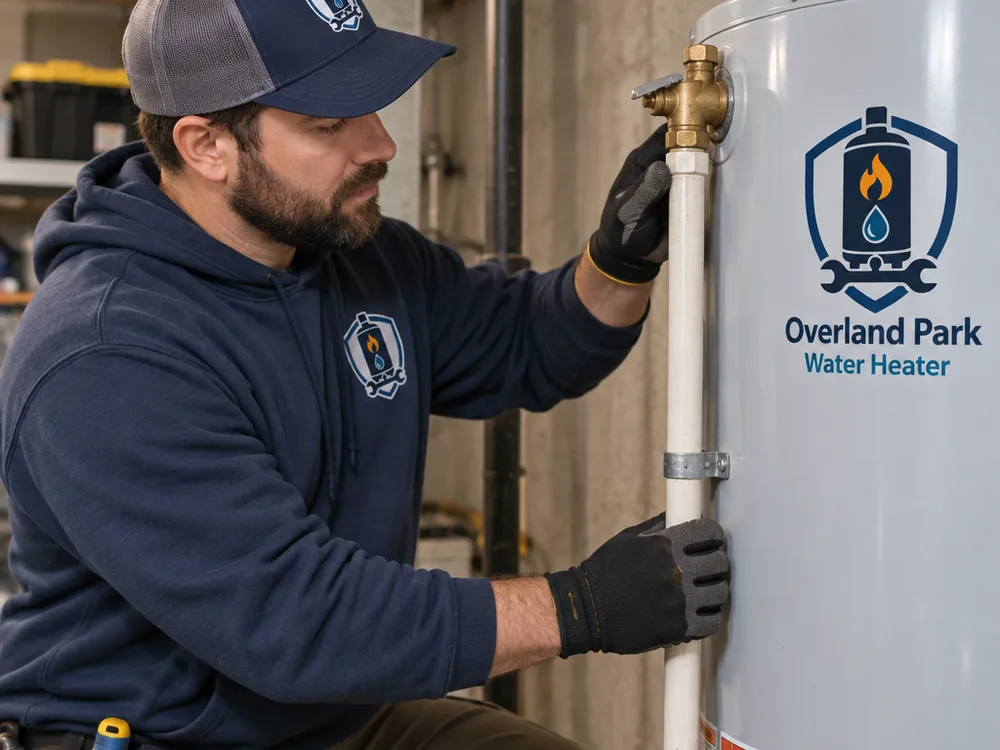
In Johnson County, a lot of water heaters live in basements or utility rooms near finished spaces. When a tank starts weeping, a slow leak can become damaged flooring, drywall, or stored items fast. If you are in a split-level common around Overland Park, a heater may sit close to traffic areas or adjacent to a finished lower level, so leak containment matters.
Kansas City weather also forces the issue. Cold snaps can expose a marginal unit: recovery slows, pipes and fittings contract, and minor leaks show up. If your system is already struggling, the first really cold week is often when it finally quits.
For repairs, we focus on safe operation and reliable recovery: confirming venting and combustion on gas models, verifying element amperage and thermostat cutoffs on electric models, and testing that the T&P valve and discharge line are correct and functional. When the unit is in a tight mechanical area, we also plan access so the repair does not turn into collateral damage to surrounding finishes.
From symptoms to verified operation
You tell us what you are seeing—no hot water, leaks, noise, or error codes. We confirm fuel type, approximate age if known, and any immediate safety concerns like gas smell or active leaking.
We test the components that match your symptoms: elements and thermostats on electric, ignition and gas controls on gas, and sensors and flow requirements on tankless. We also inspect venting, shutoffs, and drainage around the unit.
You get a clear scope of what we found, what parts are needed, and what the repair is meant to accomplish. If replacement is the better call, we explain why before any work starts.
After the repair, we confirm the heater cycles correctly, reaches set temperature, and holds steady under use. If the issue involved leakage, we re-check under pressure and temperature.
We point out contributing issues such as heavy sediment signs, a failing expansion tank, or a corroded shutoff valve, so you can decide what is worth addressing now versus later.
Repair pricing factors
Hot water heater repair in the Kansas City area typically runs about $200 to $900, with many common fixes—thermostats, heating elements, pilot or ignition parts, and minor valve or fitting leaks—landing in the $250 to $600 range. More involved diagnostics, multiple part replacements, or tankless repairs can push higher.
Your final price depends on the failure point, unit type (gas, electric, or tankless), access, any code-required safety corrections such as venting or shutoff issues, and whether corrosion has seized fittings. Exact pricing is confirmed after the on-site diagnosis and a written scope.
Repair or replace
Sometimes the most honest answer is that repair money is better put toward a new unit. A water heater replaced in Kansas City is often the right call when the tank itself is leaking, when internal corrosion is advanced, or when a string of component failures suggests the system is at the end of its usable life.
Practical replacement signals we see on service calls:
If replacement is recommended, we walk through size, fuel type, and location constraints—clearances, venting route, drain pan and discharge, and shutoff placement—so the new installation fits your home and meets current requirements.
“Our water heater started leaking near the drain valve and the basement floor was damp. They tracked down the source, replaced the failed parts, and checked everything before they left. Hot water was back the same day.”
“I appreciated the straight explanation. They showed why the tank itself was failing and why replacement made more sense than chasing repairs. The new setup is cleaner and the temperature is steady.”
Straight answers
Same-day repair is often possible for common failures like thermostats, heating elements, pilot/ignition parts, and minor valve or fitting leaks, as long as the unit is safe to operate. If a specialty part is required or the tank has failed, we will explain the fastest realistic next step after diagnosis.
No, a leak is not always a replacement, but the location of the leak determines the answer. Leaks from threaded fittings, the T&P valve line, or the drain valve area may be repairable, while water seeping from the tank body or seams typically means the tank has failed and needs replacement.
If it is safe to do so, shut off the cold water supply to the heater and turn off the power (breaker for electric) or set the gas control to the off position for gas units. If leaking is heavy, avoid standing water near electrical cords or appliances in the basement and move items away from the area.
Yes, many tankless problems are repairable, including sensor faults, ignition issues, restricted inlet screens, and flow-related errors. Tankless units can also require cleaning or descaling depending on operating conditions, and we will confirm what the unit actually needs after reading error codes and testing performance.
Running out of hot water quickly is commonly caused by a failed lower heating element on an electric tank, a thermostat problem, sediment reducing usable capacity, or a dip tube issue that mixes cold and hot water in the tank. We diagnose by checking element function, temperature recovery, and signs of sediment at the drain.
We base the recommendation on safety, the condition of the tank or heat exchanger, the likelihood of repeat failures, and how much of the total scope is going into correcting age-related deterioration. If the core vessel is sound and the failure is isolated, repair is usually sensible; if the tank is leaking or heavily corroded, replacement is usually the better investment.
Schedule a diagnostic visit
If you are dealing with no hot water, temperature swings, strange noises, or a leak around the heater, schedule a diagnostic visit with Overland Park Water Heater. You will get a straightforward repair recommendation, and a replacement option when it is the smarter choice.